Serving Corsicana, TX and surrounding areas. (430) 775-4881
Everything you build above ground depends on what is below it. In Corsicana, that means footings designed for Blackland Prairie clay - not a generic depth that works somewhere else.
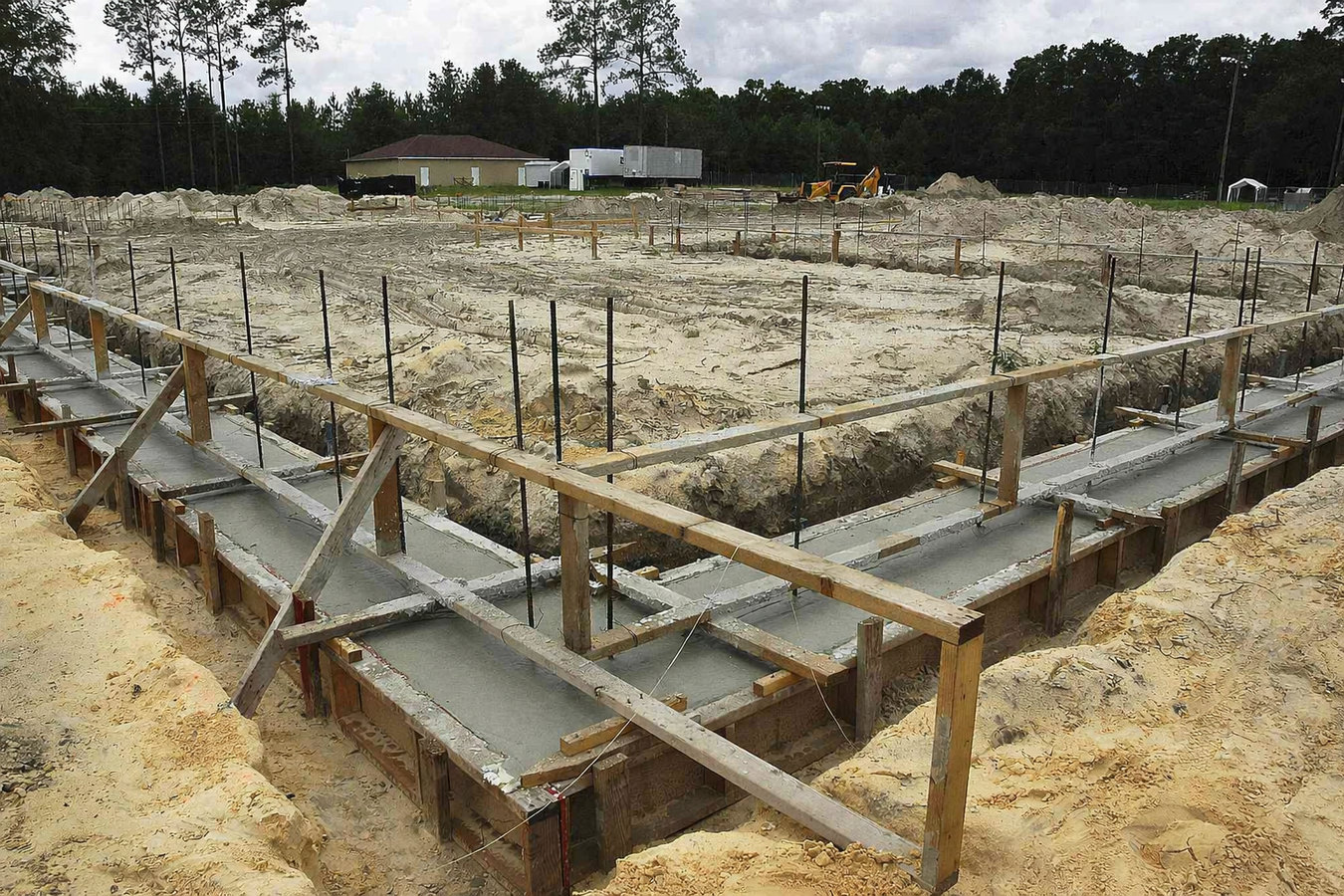
Concrete footings in Corsicana involve excavating to the required depth below the active clay layer, placing steel reinforcement inside the trench or form, pouring and curing the concrete, and coordinating the required city inspection before the pour - most residential footing projects take one to two days of active work and several days of curing time.
A footing is the buried concrete base that spreads the weight of a structure across a larger area of soil so the building does not sink, tilt, or crack over time. In most parts of Texas, a standard footing depth works fine. In Corsicana, the Blackland Prairie clay underneath the city swells in wet weather and shrinks in dry weather - sometimes significantly - and a footing that does not account for that movement will shift with the soil and transfer that stress directly into the walls, floors, and framing above it. We design footing depth and steel reinforcement around the actual conditions on your site, not a one-size-fits-all spec. If you are also building a full foundation installation as part of the same project, we can coordinate both scopes together.
Call us or use the estimate form and we will come out to look at the site, discuss your project, and give you a written quote before any work begins.
Any new structure - an addition, a detached garage, a covered patio, a deck with a roof, or a long fence run - needs proper footings before framing begins. In Corsicana clay soil, a new structure built on an undersized or improperly placed footing will show problems within a few years. If you are planning any new build, the footing is the first concrete step, and getting it right sets up everything above it.
Diagonal cracks running from the corners of doors or windows, walls that are visibly out of plumb, or floors that slope in one direction are often signs that a footing beneath the structure has shifted or failed. In Corsicana expansive clay, this kind of movement is common and tends to get worse over time without intervention - the seasonal soil cycle keeps pushing the problem forward.
If fence posts are leaning, pulling out of the ground, or sinking unevenly, the footings beneath them have likely failed - either too shallow, too small, or not properly anchored. North Texas clay movement is a frequent cause of this problem, especially after a dry summer followed by heavy fall rains that rapidly re-saturate the soil and push footings in opposite directions.
If you have had foundation or structural work done before and the problem has come back - cracks reopening, doors sticking again, floors re-leveling - the underlying footing may not have been properly addressed. Starting with a proper footing assessment and replacement is often the only way to break that cycle for good.
We handle the complete footing process: site assessment, layout and marking, excavation to the required depth, form placement or trench preparation, steel reinforcement installation, pour coordination, curing management, and permit and inspection handling. In Corsicana, the excavation depth is a critical design variable - getting below the most active layer of shrink-swell clay is what gives the footing its stability. We specify the reinforcement based on the structure being built and the soil conditions on your specific lot, not a generic template. The pre-pour inspection is a required step we coordinate with the city on every structural footing project - that inspection confirms depth and steel placement are correct before anything gets buried. We also help customers who need foundation raising work alongside new footing installation on the same property.
Curing management matters on every job but especially in Corsicana summers. Extreme heat speeds up concrete setting, which weakens the final product if the surface dries too fast. We schedule pours around the weather and take steps to slow the cure on warm-weather jobs - protecting the long-term strength of the footing and everything built on top of it. The American Concrete Institute standards we follow set the benchmark for mix design, reinforcement placement, and curing practices on every project.
Best for homeowners adding a room, sunroom, or structural addition to an existing home who need new footings that integrate with the existing foundation and meet current code requirements.
Best for homeowners building a detached garage, workshop, accessory dwelling, or substantial outbuilding that needs its own engineered and permitted concrete footing base.
Best for homeowners building a covered deck, attached porch, or outdoor structure with a roof that requires individual post footings or a perimeter footing to hold the load safely.
Best for property owners who need properly anchored fence post footings that resist the seasonal heave and shrink cycle of Corsicana clay soil over many years.
Corsicana sits in the Blackland Prairie region of North-Central Texas on heavy, dark clay that behaves differently from most other soil types in the state. This clay absorbs moisture and swells - sometimes noticeably - during wet seasons, then contracts and pulls away from foundations and footings during the long, hot, dry summers. That shrink-swell cycle repeats every year. A footing depth that would be adequate on stable sandy loam soil in another part of Texas may be far too shallow here. The clay near the surface is the most active layer, and footings that sit in that zone move with it. Getting below the most active layer is what separates a footing that stays put from one that walks around with the seasons. Corsicana also sees pronounced wet-to-dry swings within a single year - heavy spring rains can be followed by months of drought, and the soil shifts dramatically between those two conditions. American Society of Concrete Contractors standards inform the reinforcement and placement practices we follow on every job.
We serve Corsicana and the broader Navarro County area, including customers in Ennis and Waxahachie who face the same Blackland Prairie clay conditions and benefit from the same soil-specific footing design we bring to every Corsicana project.
We visit your property to look at what you are building, assess the soil conditions, check equipment access, and measure the area. In Corsicana, we pay particular attention to the clay - local soil can vary from one part of a lot to another. We reply within one business day and provide a written estimate that specifies footing dimensions, concrete mix, and reinforcement plan.
For structural footing work, we pull the permit from the city or county building department before any digging starts. The permit process typically takes a few days to a week. We handle the application and keep you informed of the timeline so you know when the crew can start.
The crew marks the footing locations, digs to the required depth past the active clay layer, and installs the steel reinforcement. Before any concrete is poured, a building inspector visits the site to confirm the depth and steel placement meet the approved plans - this is an independent check that happens before everything gets buried.
Once the inspection is passed, the concrete is poured and managed through the curing period - typically several days before any framing load is applied. In Corsicana summers we take extra steps to protect the surface moisture. We close out with a walkthrough and provide copies of any permit and inspection documentation.
We visit your site, assess the clay, and give you a clear written quote at no charge. Permits and inspections are handled for you from start to finish.
(430) 775-4881We set footing depth based on the actual conditions under your lot - not a standard number that might work on sandy soil somewhere else. Corsicana Blackland Prairie clay moves significantly with the seasons, and the footing design accounts for that movement from the beginning. That is why structures we build on stay straight and level over time.
We pull the permit and schedule the pre-pour inspection as part of every structural footing project - you never navigate the building department on your own. A permitted, inspected footing is on record and protects you if you ever sell the home or need to prove the work was done to code. Texas state contractor licensing is verifiable online.
Concrete is strong under compression but weak under tension - steel handles the tension forces that keep a footing from cracking apart under load or soil movement. We specify the reinforcement based on the structure and site, not a generic minimum. A footing without proper steel may look fine for years and then fail when soil conditions change.
Corsicana summers are hard on fresh concrete - extreme heat speeds up setting and can weaken a footing if the curing process is not actively managed. We schedule pours around the forecast and take protective steps on warm-weather jobs. Rushing this step is one of the most common ways footings fail before their time.
Every footing we install is designed for the specific project and site conditions, not copied from a generic template. The combination of local soil knowledge, proper steel placement, permitted inspections, and managed curing is what makes the difference between a footing that holds for decades and one that causes problems within a few years.
Lifting and leveling an existing foundation that has settled or shifted - often done alongside new footing work on the same structure.
Learn MoreComplete new foundation installation for homes, additions, and structures that need a full engineered concrete base from the ground up.
Learn MoreClay soil moves every season in Navarro County - call now or submit the form and we will assess your site, design for the actual conditions, and get your project on the schedule before the summer heat arrives.